
“Does listening to an audiobook count as reading?” This is the question posed by Brian Bannon, chief librarian at the New York Public Library in a thought-provoking essay in The New York Times. Bannon, who says in the piece that he has dyslexia and has always struggled with reading, answers this question with a resounding Yes!
At MMFS, we’ve always known that audiobooks count as reading. Back in the day, our library was filled with books on tape and then “playaway” devices. Now our library is filled with audiobooks. It’s good to know that everyone else is catching up to us!
Our teaching methodology has always been to provide students with audio to support their reading skills and boost their reading enjoyment. We know that students process information differently. Some are auditory learners; some are visual learners; some are kinesthetic learners; some learn through a combination. We work with each child to find the tools and strategies that will help them learn and succeed.
We teach reading with programs like the Orton-Gillingham PAF program—a multisensory program that teaches decoding (reading) and encoding (spelling)—and the Wilson Reading System, in which students work on decoding, reading comprehension and fluency, and vocabulary.
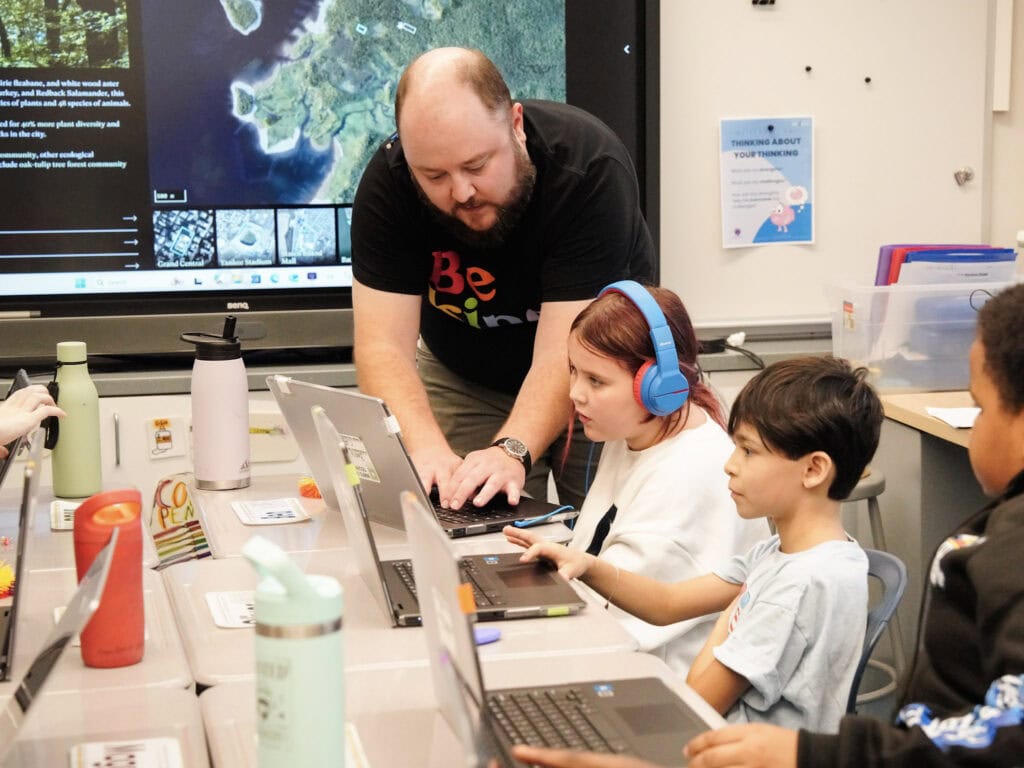
Some of our students may struggle to read, but we encourage a love of books. The Read-A-Thon for example – which takes place each winter in all three divisions – promotes reading while raising money for worthy causes. The annual bookfair is another way we encourage reading for pleasure.
Bannon calls for “the destigmatizing of audiobooks” as a way to consume literature, and suggests thinking differently about literacy:
Part of the confusion comes from how we tend to think reading works. Learning to read with the eyes starts with decoding, linking letters to sounds and meaning. But once those pathways are built, the brain draws on the same language network to make sense of words, whether they arrive through sight or sound. A 2019 study in The Journal of Neuroscience by researchers from the University of California, Berkeley, found that the brains of people reading or listening to the same stories processed meaning in almost the same way. Focused listening lights up those networks just as print does.
You can read the essay here. You can also listen to it by clicking the play button on the audio track. Whether you read it with your eyes, your ears, or both, I hope you enjoy it.