This article is excerpted from Shining the Light on LD: The MMFS Learning Disabilities Handbook.
What is Occupational Therapy (OT)? What Does OT Look Like in School?
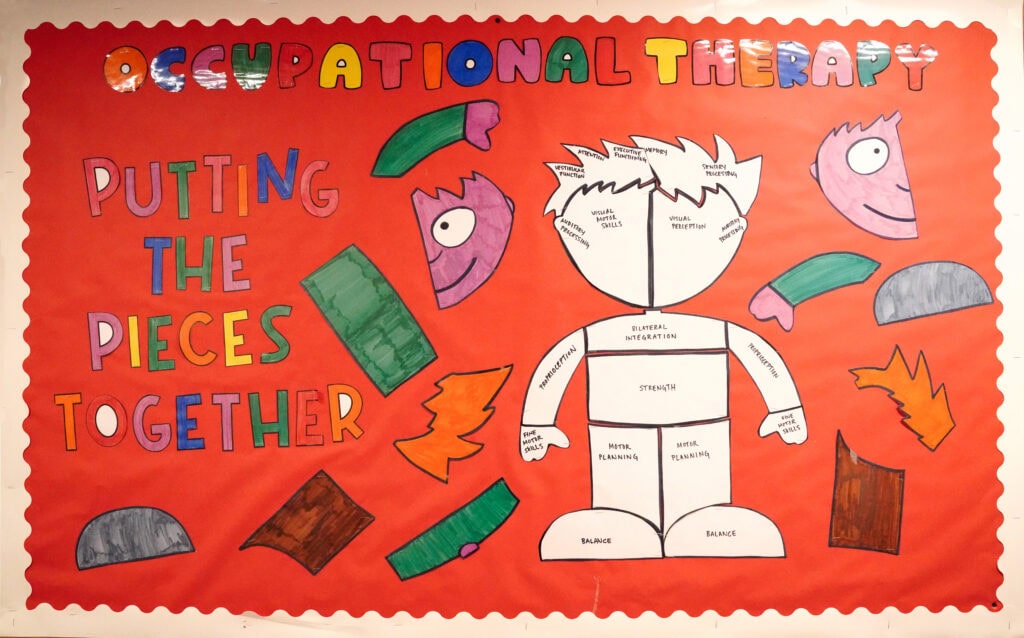
Occupational therapy addresses a range of difficulties that interfere with learning.
For instance:
- Motor Functioning and Dyspraxia. Difficulty with motor coordination and fine motor dexterity. Motor coordination can also affect speech, resulting in an articulation disorder.
- Sensory Processing. The process that enables recognition, use, assimilation, and organization of everyday sensory information in order to interact effectively with the environment. This includes sensations from the environment, as well as body position, movement, and information from the organs of the body.
- Self-Regulation. The ability to take information such as energy level, emotional status, thoughts, and/or attention and use strategies that support more engaged, comfortable participation in the learning environment. Challenges with this process may be referred to as dysregulation.
- Visual Perceptual/Visual Motor Deficit. Challenges with receiving, interpreting, and moving with precision to complete a task. This may include letter reversals, difficulty with copying from the board with accuracy, hand-eye coordination, and finding specific items in a busy visual environment.
It’s important to remember that occupational therapy is not just for working on “legible handwriting;” OT also helps with managing your body in space, taking in and regulating both sensory information and emotions, as well as perception of written language.
How Occupational Therapy Supports Students in School
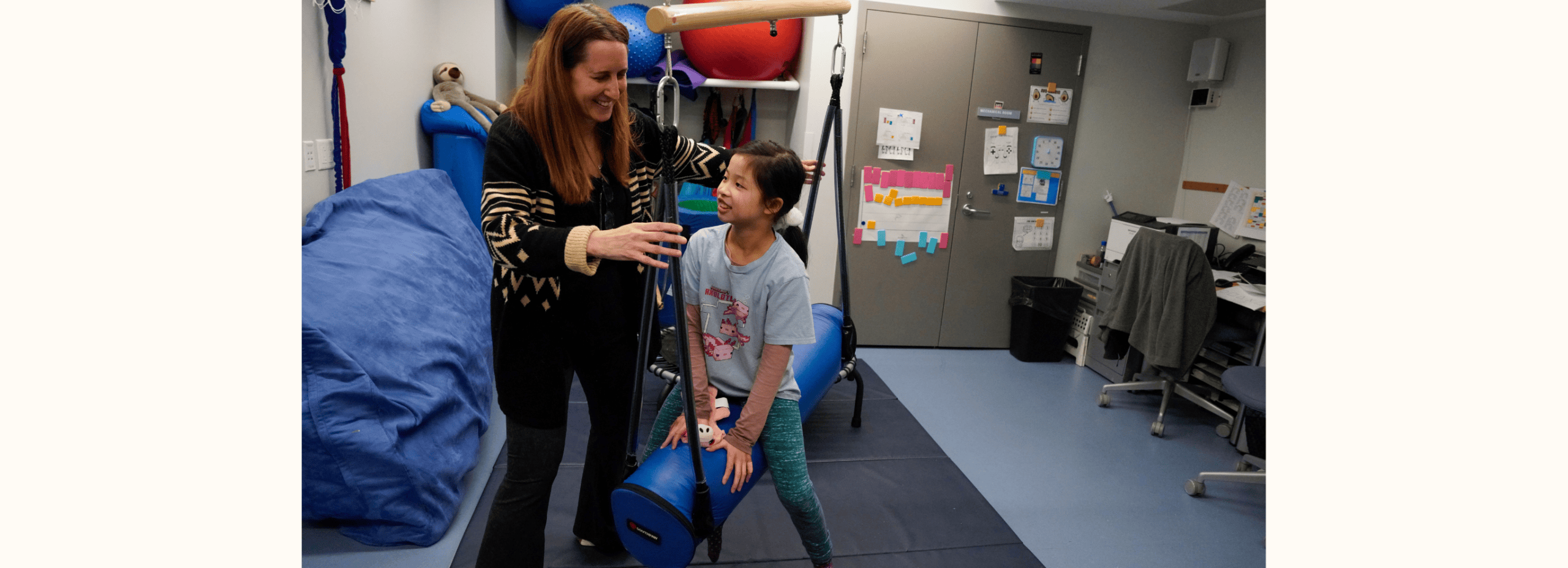
One of the benefits of an MMFS education is that occupational therapy is a regular part of the school day, to support learning in every classroom and every subject. Our team of OTs (occupational therapists) work with students both in the classroom (“push in”) and in a separate setting (“pull out”). Our lower school building has a fully equipped sensory gym that offers gross motor sensory support. Our OTs may recommend adaptive equipment such as pencil grips, ball chairs, standing desks, and movement breaks.
We employ the following strategies for developing skills that address sensory and motor needs:
Motor Functioning and Dyspraxia
- Structured activities to improve fine and gross motor skills, such as using playdough, puzzles, and therapeutic swings.
- Adaptive grips and/or slant boards for writing.
Sensory Processing
- Seating options to meet specific student needs (e.g., wiggle cushions, therapy balls, standing desks).
- Access to a “sensory toolkit” with fidgets, stress balls, or weighted items.
- Movement breaks and/or quiet spaces to help manage sensory input.
Self-Regulation
- Teach and model self-regulation strategies and tools like feeling charts or zones of regulation.
- Help students recognize and regulate their energy level, mood, and attention, and then help them build and use a toolbox of strategies to use on their own.
Visual Perceptual/Visual Motor Deficit
- Provide visual cues, highlighted lines on paper, and graph paper to help with spatial organization.
- Break down visual tasks into smaller steps and provide templates or outlines for copying.
- Use verbal cues to accompany visual information.
How You Can Support Your Child with Occupational Therapy Activities at Home
Families play a vital role in reinforcing skills and providing a supportive environment at home.
Motor Functioning and Dyspraxia
- Engage in activities that build fine motor skills (e.g., drawing, building with LEGOs, playing with clay) and gross motor skills (e.g., riding a bike, playing catch, climbing on a playground).
Sensory Processing
- Create a “quiet” space at home and be mindful of sensory triggers (e.g., loud noises, certain textures, clothing tags, socks).
Self-Regulation
- Establish predictable routines to reduce anxiety and promote regulation.
- Help the child identify their feelings and energy levels.
Visual Perceptual/Visual Motor Deficit
- Play games that require visual discrimination and motor planning, such as puzzles, “I Spy,” or drawing games.