
by André Del Valle, Head of School
Guten Tag!
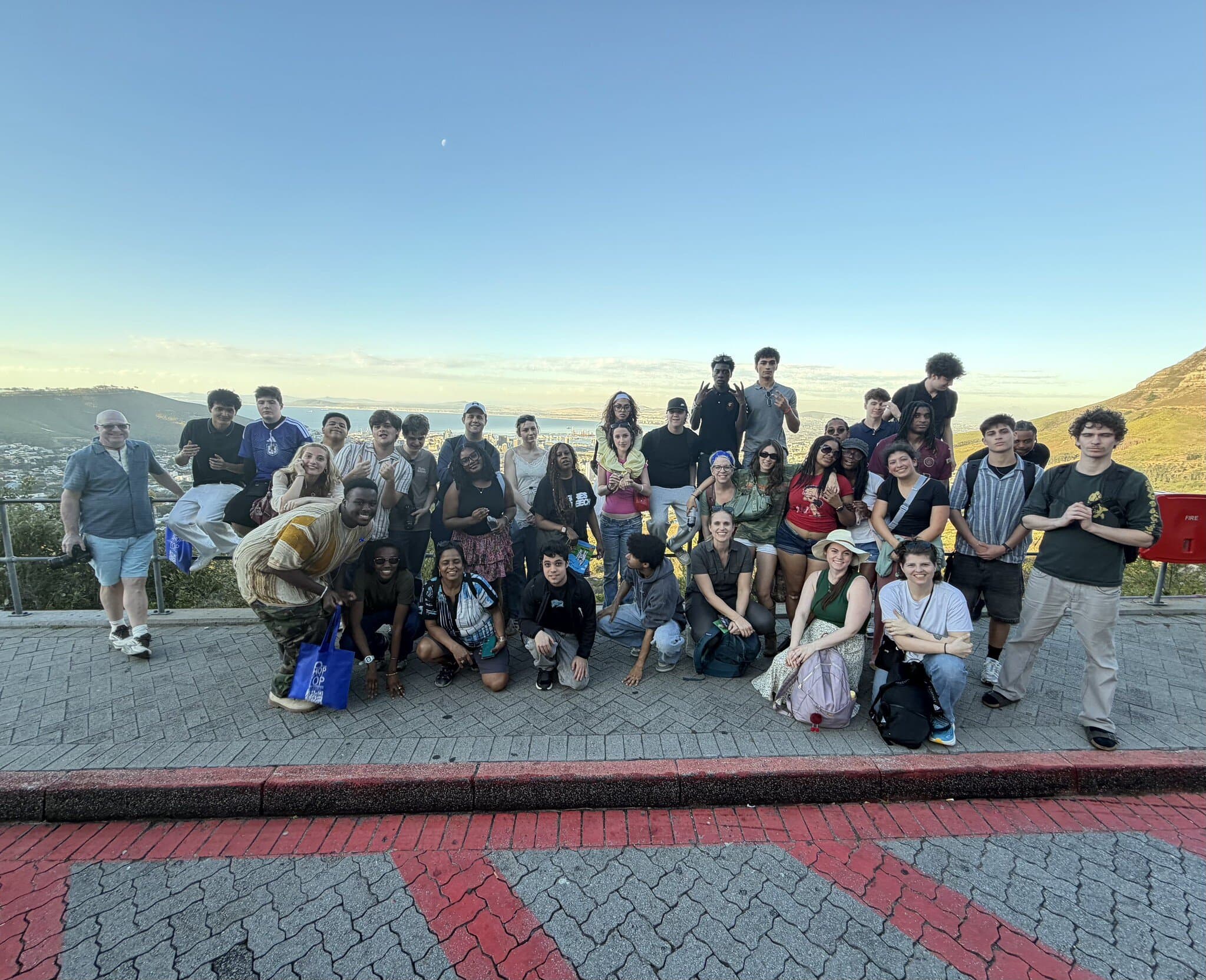
Every year I look forward to the annual 10th grade trip to Germany and Austria. This was my third time and I can tell you: It doesn’t get old. For seven days, our hardy band of 34 students and 9 chaperones explored Munich, Salzburg, and Vienna, moving through history, culture, beauty, and moments of awe that none of us will forget.
This trip is part of the MMFS curriculum and mission. International travel allows our students to experience history, art, and culture firsthand. But what I witness each year is something deeper. Students with learning disabilities discover what they are capable of when they are taken out of their comfort zones and trusted to rise to the occasion: navigating a foreign country, trying new foods, processing difficult history, leaving their cell phones behind, and learning more about each other.
Our students met every moment with curiosity, compassion, and good humor, not to mention tremendous appetites. And it’s not just cultural horizons that were broadened: Our “favorite food on the trip” query yielded a lot of votes from the students for “schnitzel.” The chaperones expanded their palates (and German vocabulary) with their delight in “eis kaffe.”
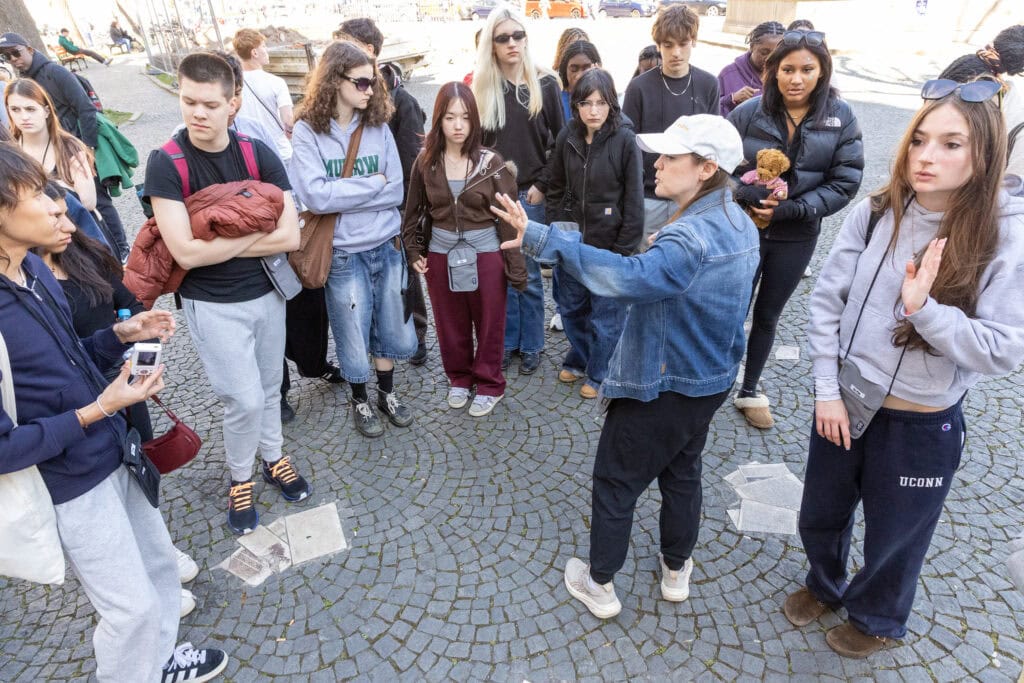
The trip began in Munich, where we reunited with our old friend, tour director Maurizio—who’s practically family, after all the years we’ve worked together! We plunged straight into the city, starting at the Viktualienmarkt, Munich’s oldest outdoor food market, where students sampled sausages, strawberries, fresh bread, and the occasional very good pickle. From there, a walking tour of Munich’s historic center took us through the Marienplatz, Munich’s central square, home of the famous Glockenspiel and its animated figures. Next was the iconic Frauenkirche (Church of Our Lady), and then on to Ludwig-Maximilian University, where we visited the memorials to the White Rose resistance movement—the student-led group that opposed the Nazi regime and paid for their activism with their lives. It was a powerful reminder of the courage young people can show in times of injustice.
The next day began with a guided tour of the Dachau Memorial Site. Established in 1933, Dachau served as the model for all subsequent concentration camps and imprisoned more than 200,000 people over its 23-year existence. Walking through the entrance gate, under the infamous slogan “Arbeit macht frei” (“Work sets you free”), to the barracks, memorials, and crematorium offered a sobering look at the machinery of Nazi terror and the lives affected by it. Our students walked the grounds with the seriousness and respect this history demands. The students moved through each experience with thoughtfulness and care. Afterward, we shared some reflection through Silence. Some students who identify as Jewish stayed to recite the Mourner’s Kaddish, a traditional Jewish prayer of mourning. I was moved by how our students processed this experience, demonstrating the ability to sit with difficulty, ask hard questions, and feel the weight of history without turning away from it.
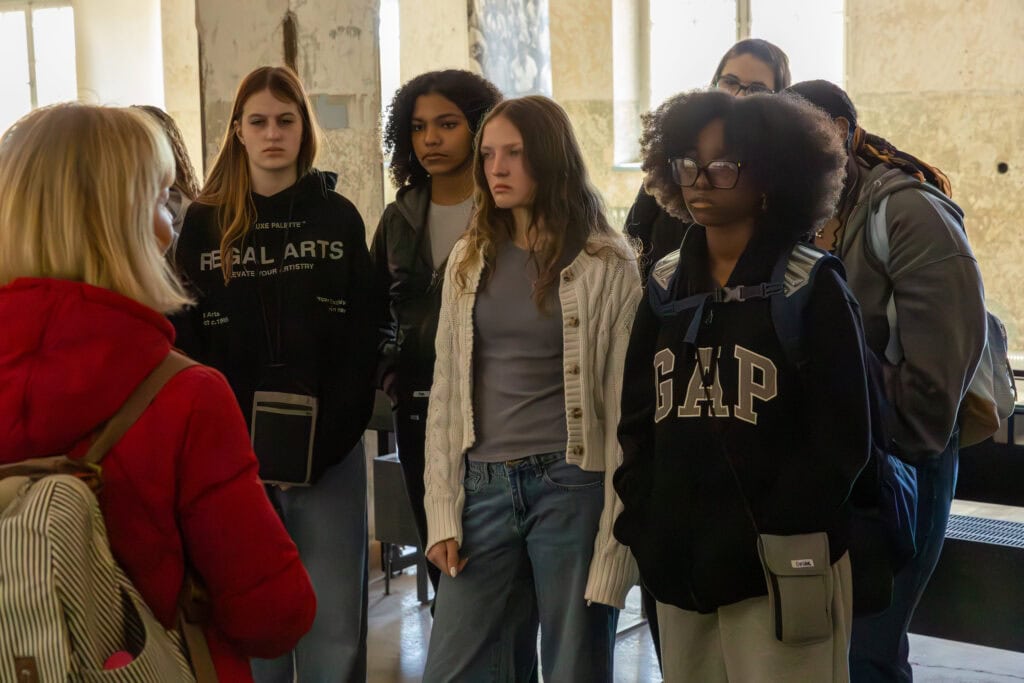
Leading students on this portion of the tour and exploring such a dark time in history is a solemn responsibility. I am always so impressed by our team of chaperones, who deal with this somber part of our trip with enormous sensitivity. I was also very proud of the way this group of students asked questions, listened attentively, and reached out hands—both literally and figuratively—to each other.
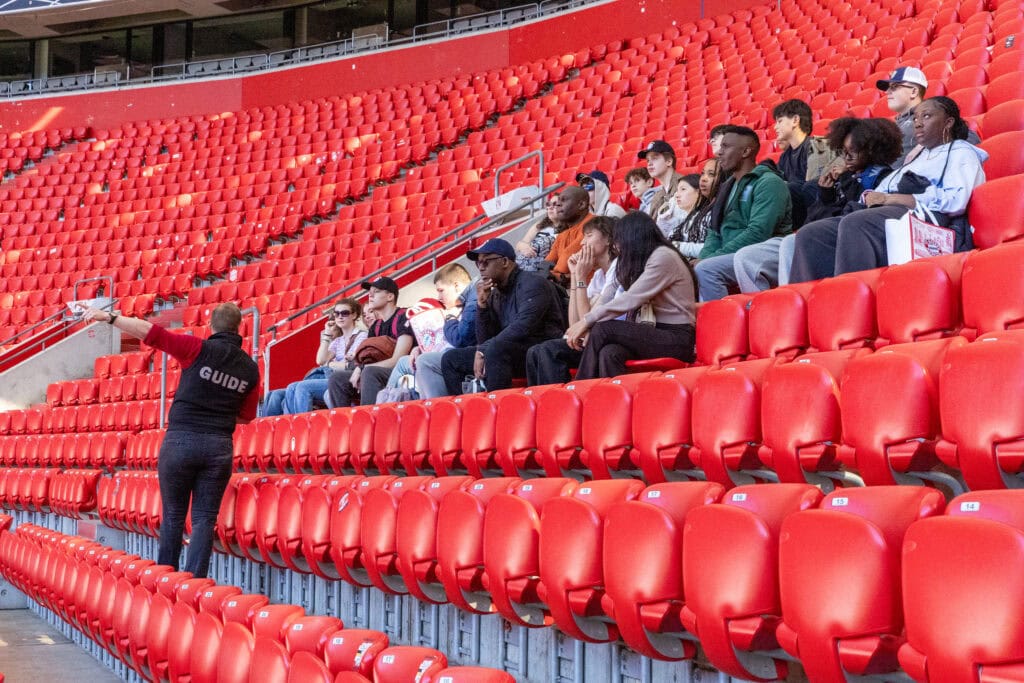
After lunch, we shifted gears for a behind-the-scenes tour of Allianz Arena, home of FC Bayern Munich. We got to walk down the player’s tunnel onto the pitch, with the Champions League anthem echoing all around us, chanting “Goal!” at the top of our lungs. (The acoustics, I can confirm, are excellent.)
From Munich, we made our way to Salzburg, experiencing castles, lakeside scenery, and some iconic musical theater history. En route we visited the Chiemsee, often called the “Bavarian Sea.” Then we boarded a ferry to see the Herrenchiemsee Palace—built by “Mad King” Ludwig II as a tribute to Versailles, and every bit as excessive. We arrived in charming and picturesque Salzburg and strolled through the famous Mirabell Gardens, where some of The Sound of Music was filmed. We ended the day with a Sound of Music dinner and performance featuring songs and singalongs from the beloved musical along with a little Mozart. What happened next is already the stuff of MMFS legend: Our very own Twan Claiborne was serenaded with an aria from the opera Don Giovanni; Twan was a very obliging costar.
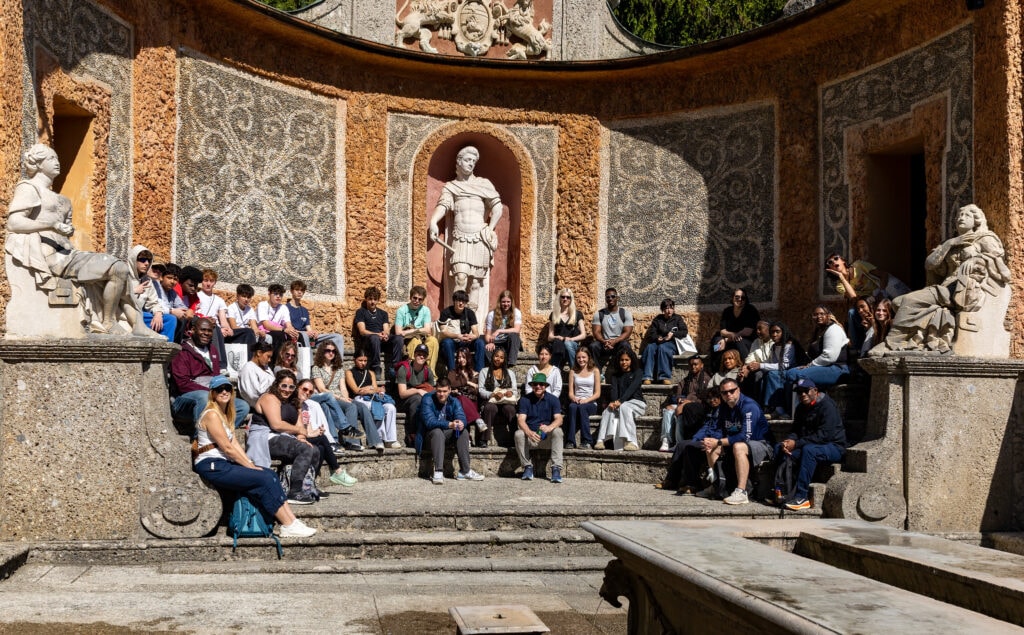
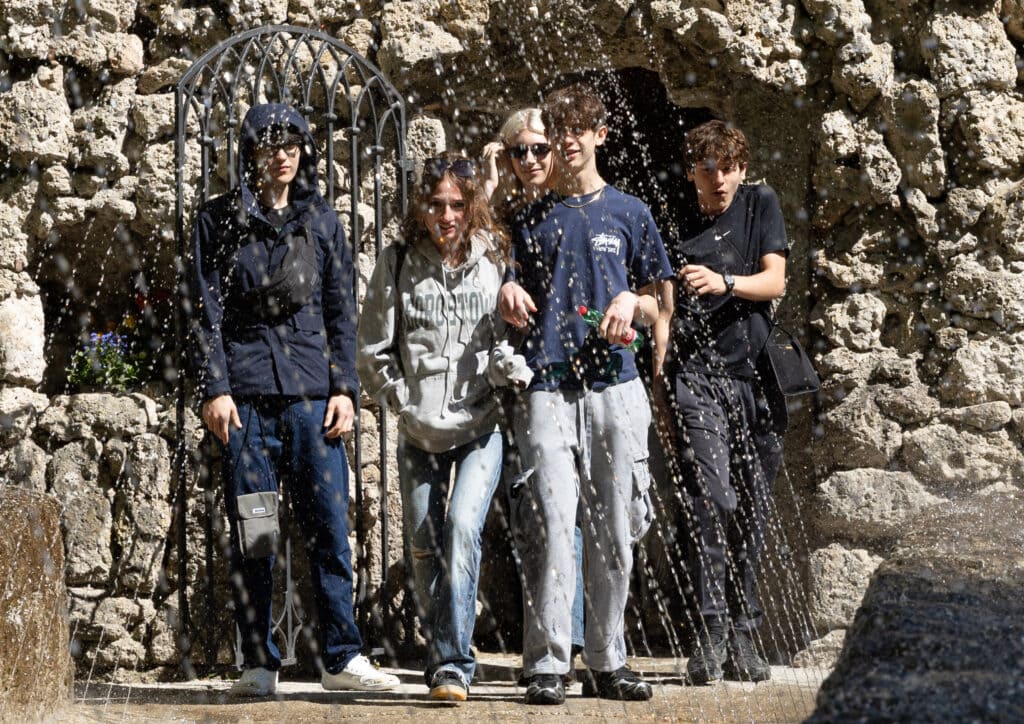
The day that followed took us to the Hellbrunn Palace to experience its famous trick fountains. With 400-year-old engineering (no electricity—just water power) the fountains were designed to surprise and soak guests. The students had a blast, despite being a little “salty” that we didn’t warn them. (In our defense, we did tell them that there was a chance of showers!)
Next we crossed over the border into Germany to visit the Berchtesgaden Salt Mines and learn about the 500-year history of salt mining in the region. After suiting up in miner’s coveralls, we took a small train deep into the mountain. Highlights of the tour included wooden slides that carried us down to the lower levels, as well as a boat ride across an underground salt lake illuminated by colorful lights.
The next day, as we prepared to say “So long, farewell, auf wiedersehen, goodbye” to Salzburg, we visited the Hohensalzburg Fortress and took the funicular up the mountain. Completely by chance, we arrived at the top during the Georgiritt—a ceremonial horseback procession honoring St. George that concluded with a blessing of the horses in the fortress courtyard.
Next stop: Vienna! After the quiet and provincial charm of Salzburg, Vienna felt vibrant, and bustling. We walked around the historic city center and visited the Judenplatz (Jewish Square), a memorial to the 65,000 Austrian Jews murdered during World War II. This monument invites you to pause and consider the sheer scale of loss. Amanda discussed how this space challenges us to hold not only personal grief but also the collective weight of history. She reminded us that people are stronger than their oppressors, and that it is up to each of us to be better than the generations before us.
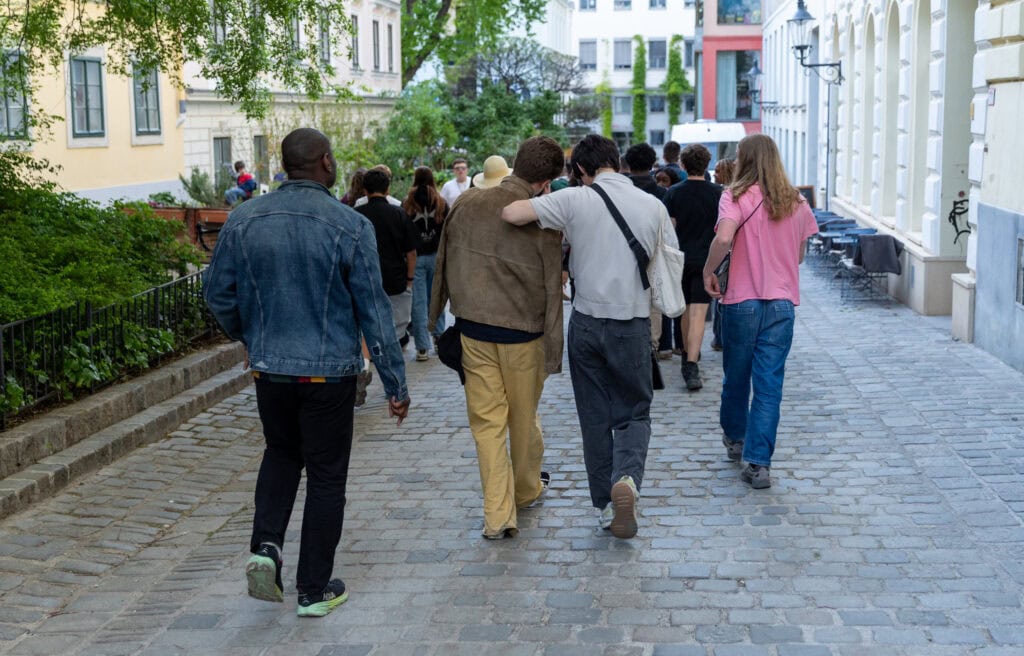
Our final full day in Vienna was a fitting close to an extraordinary week. We began with a quick walk to St. Stephen’s Cathedral, Vienna’s great Gothic landmark, with its famous colorful tiled roof and the “O5” symbol carved into its facade—a secret code used by members of the Austrian resistance during World War II.
From there, we made our way to the Hundertwasser Museum, where the building itself is the exhibit: uneven floors, vibrant mosaics, and greenery integrated into the design.
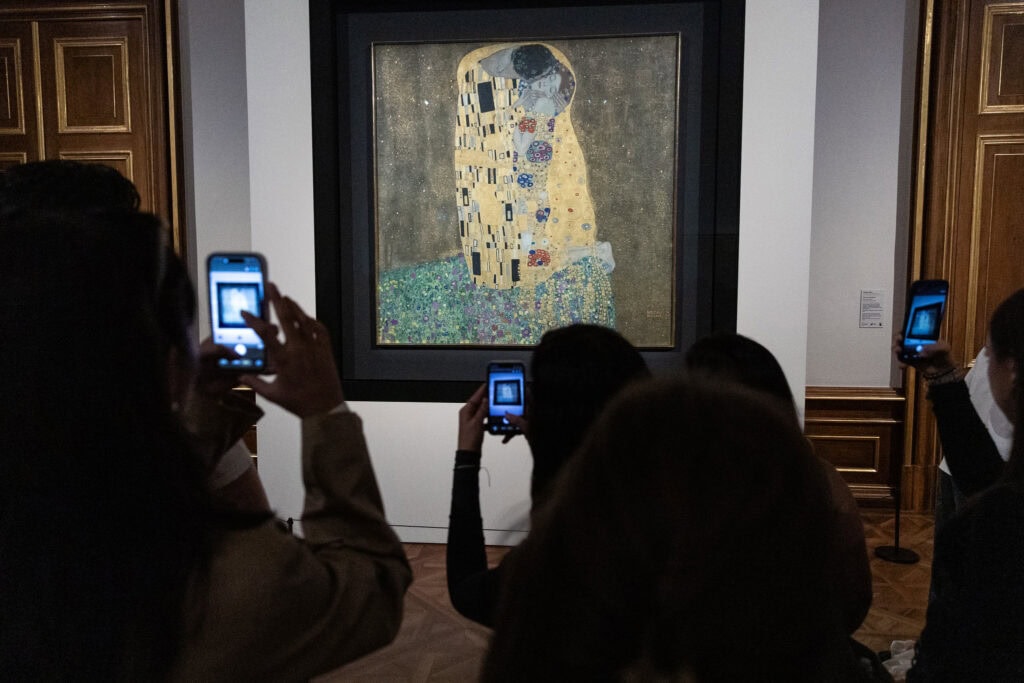
We next visited the Belvedere Palace, a grand Baroque estate housing one of Austria’s most important art collections. The highlight for many was coming face to face with Gustav Klimt’s The Kiss—the iconic gold-leaf-covered painting, which was even more breathtaking in person than in any reproduction. Students explored the museum in pairs and trios on a scavenger hunt, tracking down the museum’s most famous masterworks.
We ended the day at the Danube Canal for a graffiti walk, where Vienna’s ever-changing street murals provided the backdrop for a student “album cover” photoshoot. It was a fun, creative way to engage with the space and exactly the right note on which to spend our last afternoon abroad. Dinner brought one final Viennese tradition: sachertorte — rich chocolate cake layered with apricot jam, first created in the 19th century and a sweet way to close our final evening together in Vienna.
That evening we met in the hotel lobby to share reflections and gratitudes. Students reflected upon their favorite moments from the trip, with the salt mines and trick fountains competing for favorite activity, and bus rides and sleepovers competing for Most Memorable Moment. Most of the students expressed how much they have connected with one another. We have seen our students forge new friendships and deepen the ones they’ve had for years. We have watched with pride as they stepped out of their comfort zones, engaged with tough content, and worked through conflict with care and compassion. The word that kept coming up for chaperones was “joy.” It has been such a joy to travel with these students as individuals, and even more of a joy to travel with them as a grade.