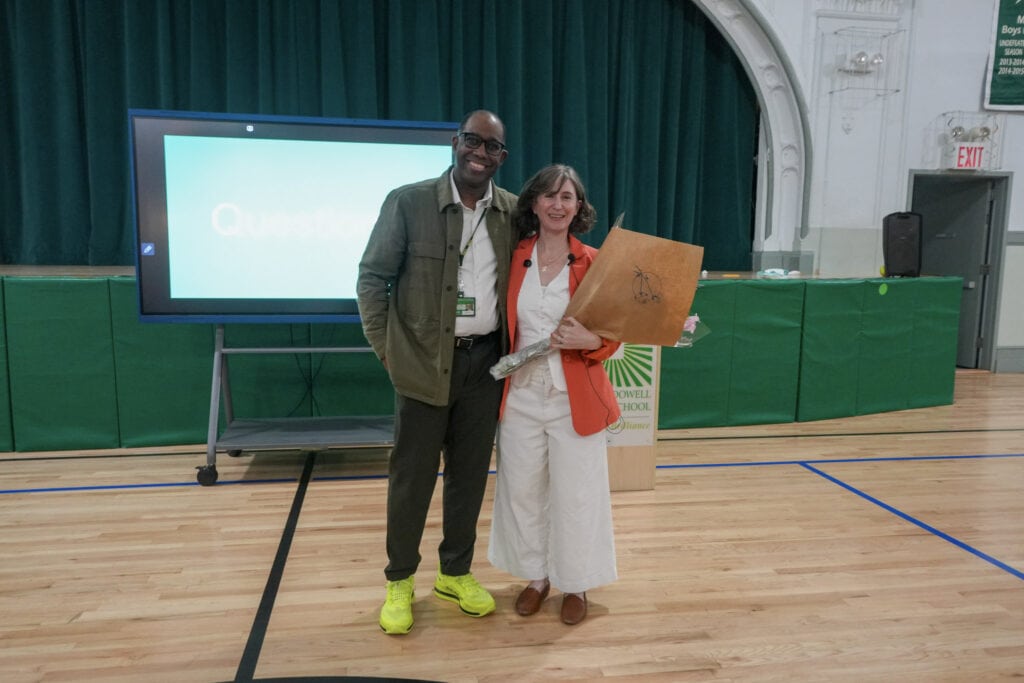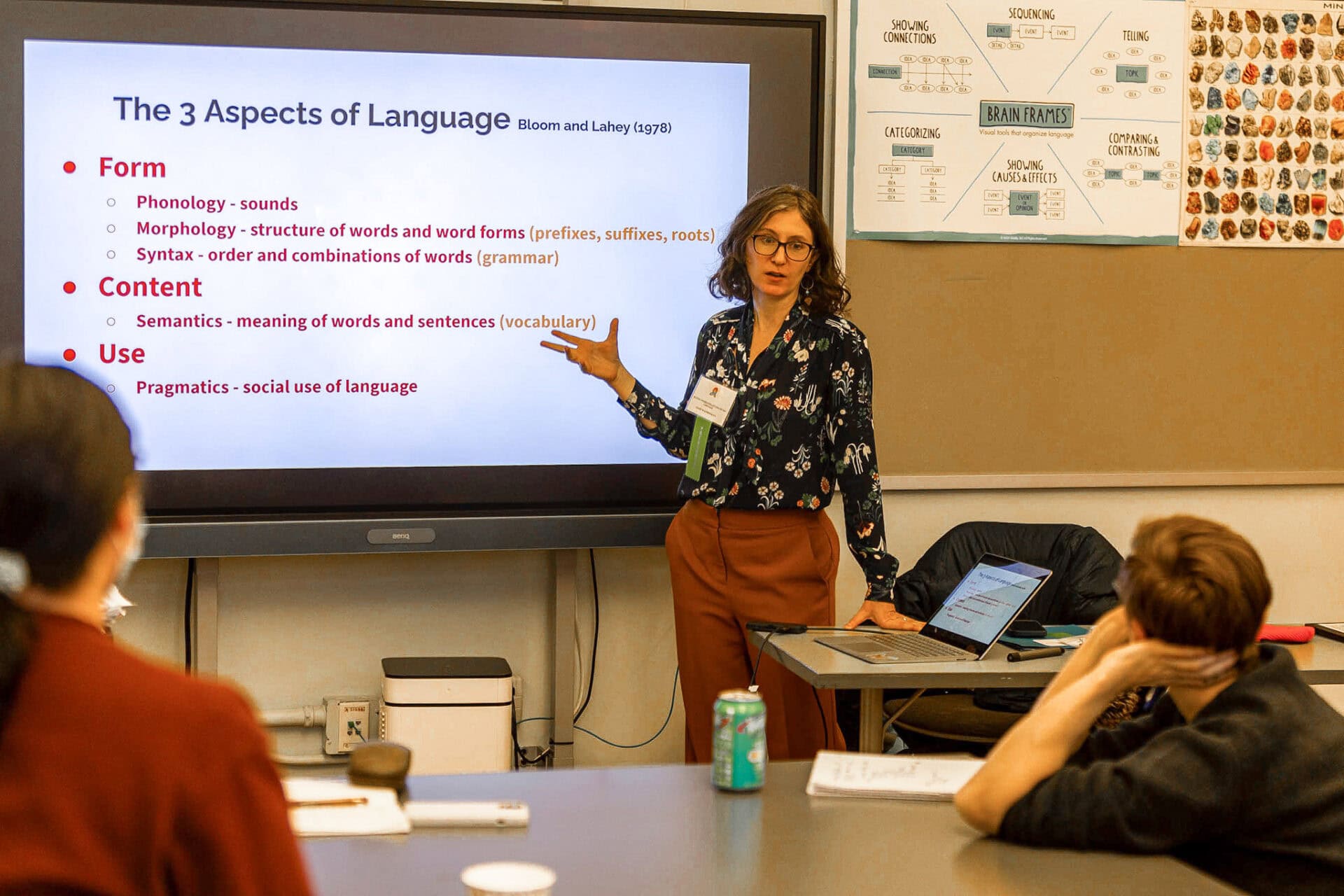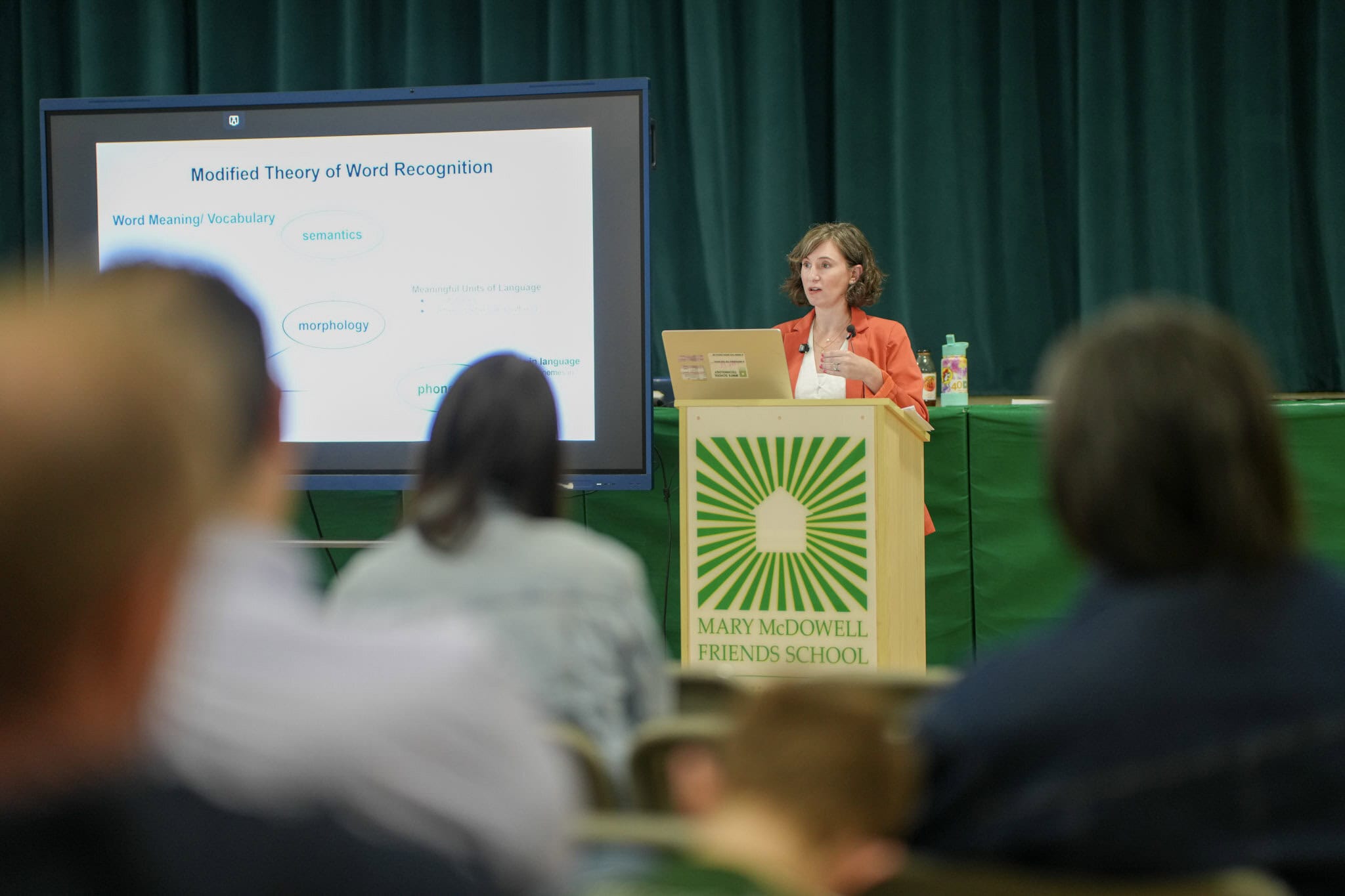

The 2025-2026 Head of School Speakers Series wrapped up this week with middle school Speech and Language Pathologist Leah Wasserman presenting an innovative and highly responsive approach to literacy instruction. Leah is one of the inaugural recipients of the Stacy Miller “Question Everything!” Research Award, which was created to support “the professional growth of dedicated educators by funding innovative research that will enhance teaching practices and enrich the learning experiences of our students.” André introduced Leah with a reminder to the audience of how lucky the MMFS community is to have such a talented and dedicated educator sharing her expertise with the school.
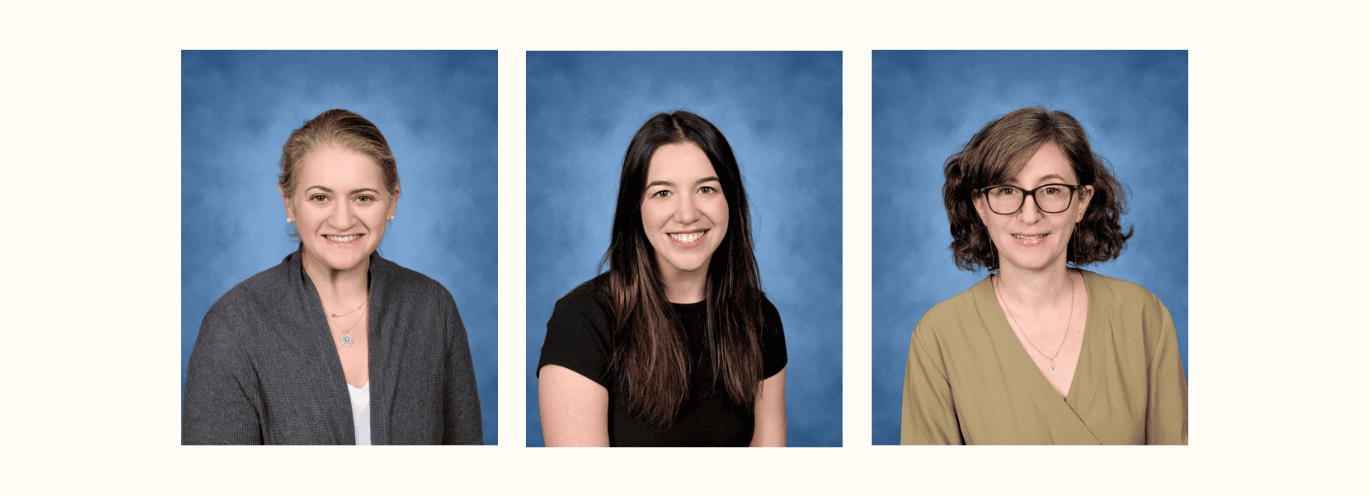
Leah’s research project, “Does A Teacher-Coaching Model Supports Students’ Multisyllabic Word Spelling,” built on the work she did last summer with two of the other SLPs in the middle school (Carly Guiterman and Jessica Schanker) creating a spelling curriculum that was tailored to the needs of our students, funded by a Parents Association Grant. Their combined experience taught them that our middle school students continue to need explicit spelling instruction and repeated practice, especially as words increase in length and complexity, but that there was no program that met these requirements. So they decided to create one that did.
As educators, we know that spelling skills support reading and writing fluency as well as reading comprehension, especially when taught through a “morpho-phonemic” approach, i.e., having students think about word parts so they can break them apart and understand longer words.
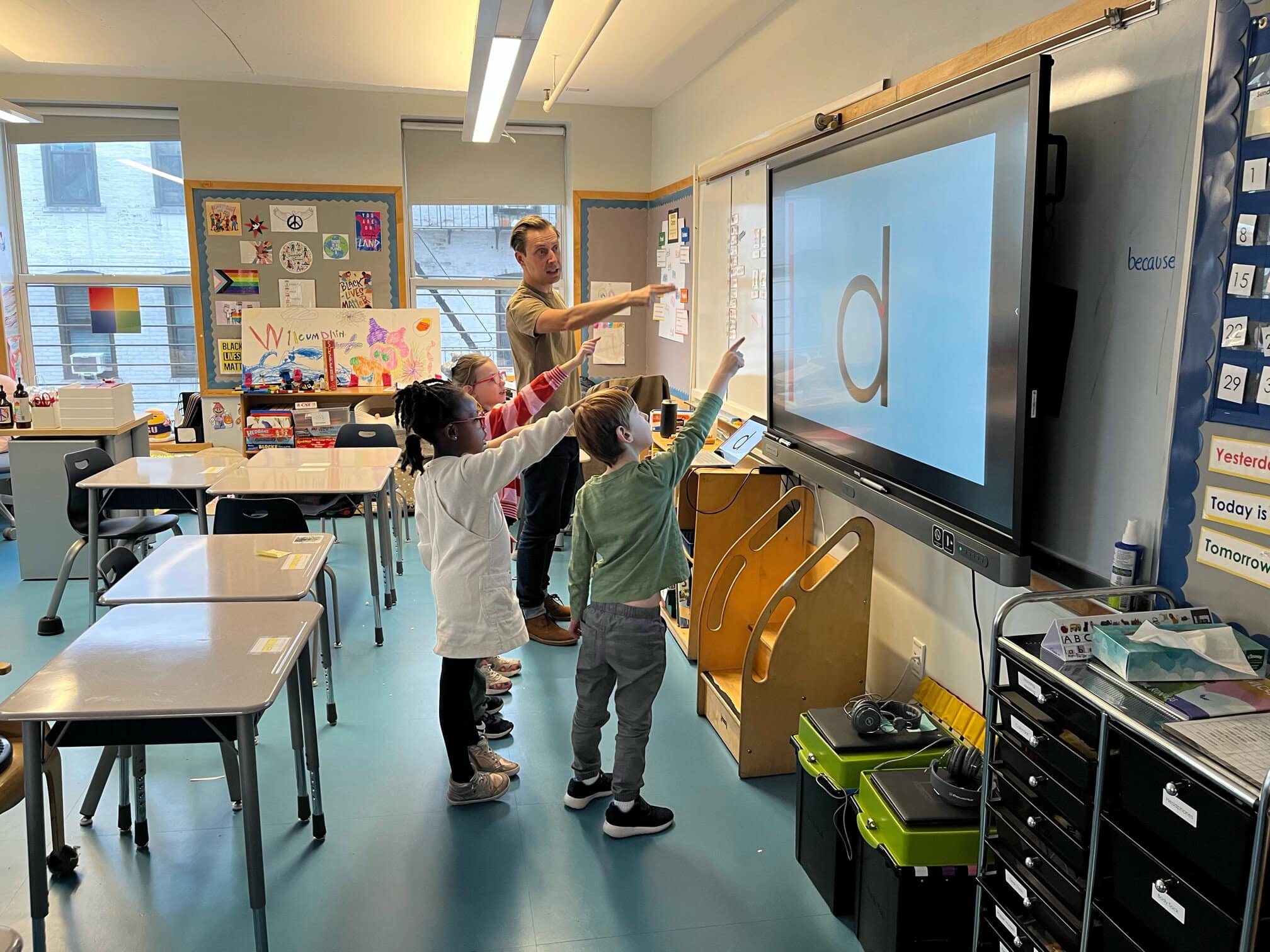
Students with language-based learning disabilities, especially those with dyslexia, benefit from extra support to facilitate strong orthographic mapping—how we store words in our long term memory. The three pillars of orthographic mapping are:
Spelling targets all three.
Knowing the ways in which our students have struggled in the past, the goal was to coach literacy teachers to use the new curriculum with their students. Working collaboratively with a group of six enthusiastic literacy teachers and 29 students, Leah modeled, coached, analyzed, and tweaked the spelling curriculum to put it into practice. The work will continue, but she and the participants are already seeing success.
As one student said, “I feel like the spelling lessons we did really worked; or at least, I think because I’m remembering things.” Another offered, “I think it’s going well because I got a lot of the words right.” Teachers also shared their positive outcomes, including, “The combination of materials and direct communication with an instructional coach made me more confident and capable.” Another teacher shared, “Meeting with Leah and the other teachers was exceptionally helpful in understanding best approaches and practices.”