
Mary McDowell Friends School - Revealing Brilliance

Shining the Light on LD: Language Therapy

This is the fifth installment in our series on learning disabilities, excerpted from Shining the Light on LD: The MMFS Learning Disabilities Handbook.

Language Therapy helps students decode, understand, and use spoken and written communication effectively.

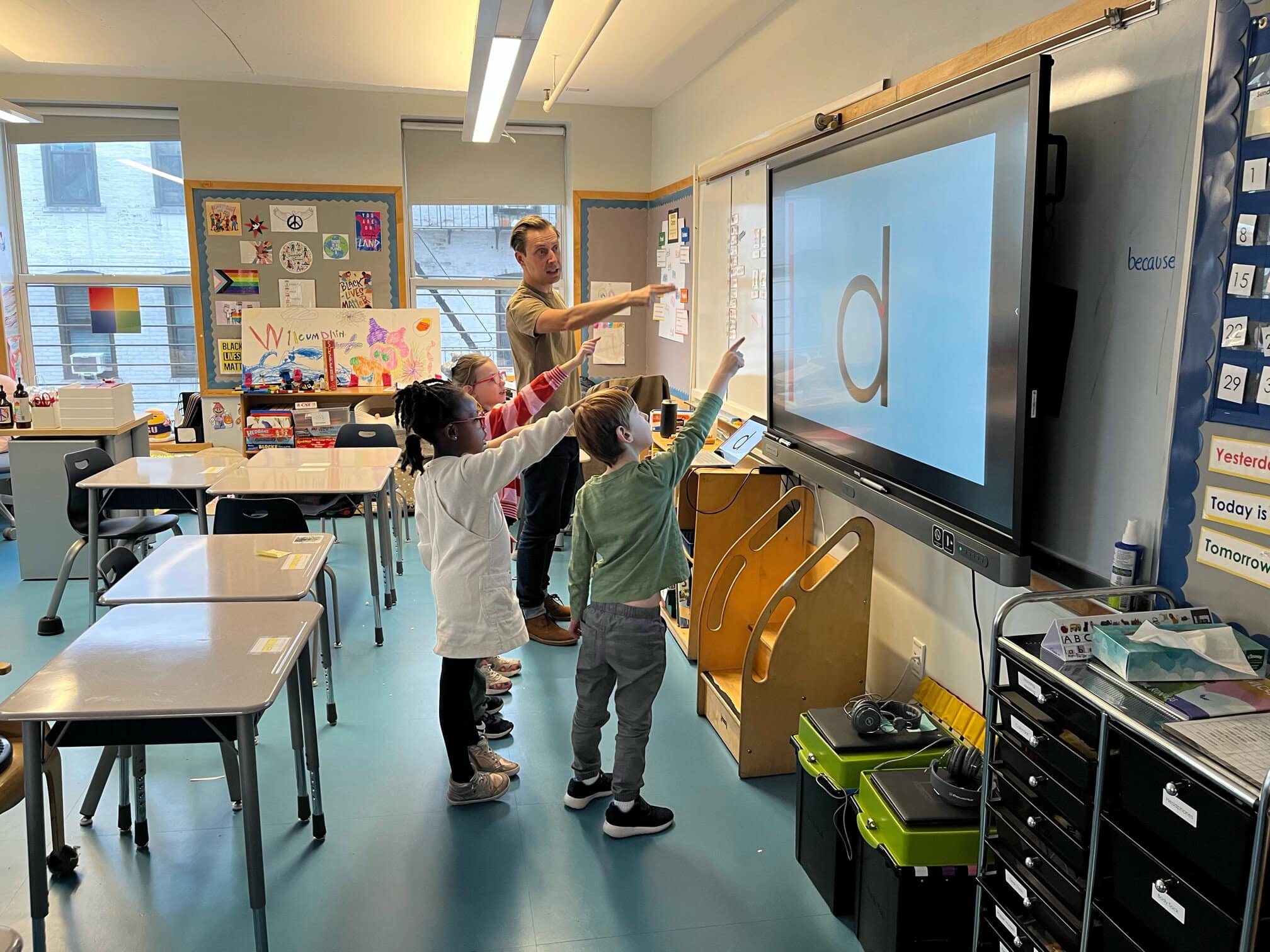
Like Occupational Therapy, Language Therapy is a regular part of the MMFS school day, supporting learning in every classroom and every subject. Our team of SLPs (Speech and Language Therapists) works with students both in the classroom (“push in”) and in a separate setting (“pull out”). 

What is Language Therapy?

Language Therapy addresses communication disorders that affect both receptive and expressive aspects of language. 

Receptive language. We help students follow multistep directions, comprehend stories, answer WH questions, comprehend vocabulary, make inferences, understand cause-effect relationships.

Expressive language. We strengthen student’s ability to use specific vocabulary, formulate sentences, retell stories clearly and completely, provide definitions, use descriptive language to expand sentences, explain inferences and answer higher level critical thinking questions

Social Communication. We work on compromising during play, maintaining conversations, and social problem solving.

How We Support Students with Language Disorders

Strategies focus on building a student’s communication skills and providing scaffolds to support understanding. 

  • Language Disorders
    • Break down language into basic components and increase complexity as skills develop.
    • Preview information, provide visual images, schedules, and graphic organizers.
    • Give explicit vocabulary instruction to build receptive and expressive language skills. 
    • Provide wait time for students to process and formulate responses and frequent checks for understanding.
  • Auditory Processing
    • Provide visual aids to accompany verbal instructions.
    • Give one- or two-step directions at a time.
    • Offer sentence starters, verbal prompts, notes, or a summary of lessons.
    • Use an FM system (teacher microphone and student receiver) to reduce background noise and improve the clarity of verbal instruction. 

How You Can Support Your Child’s Language Skills at Home

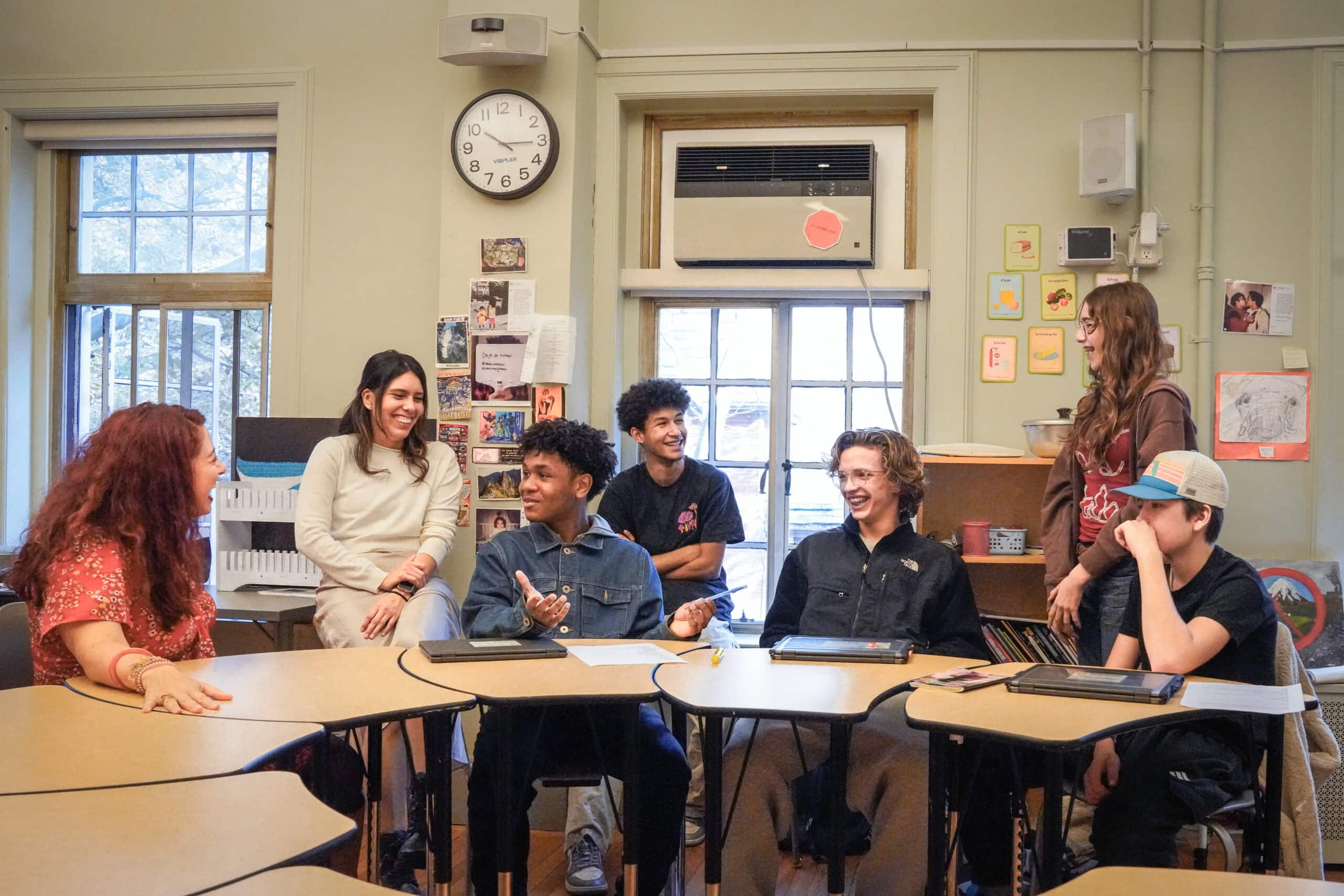
There are many ways to support the work your child is doing at school to enrich their language development.

  • Language Disorders
    • Engage in conversations and read books together. 
    • Ask open-ended questions to encourage expressive language. 
    • Use sentence starters. Play rhyming games and classification games.
  • Auditory Processing
    • Speak clearly. Repeat information in the same manner multiple times while maintaining the same tone of voice.
    • Reduce background noise during conversations. 
    • Have the child repeat instructions back to ensure the instructions have been heard and understood.

Revealing brilliance
in every student.
© Mary McDowell Friends School 2025. All rights reserved.